This content is for educational and informational purposes only. It is not legal advice and should not be relied upon as such. Every situation is unique — consult a licensed attorney in your state for guidance specific to your case.
Managing Divorce Stress:
Stay Strong When Everything Feels Broken
You can't pour from an empty cup. Your kids need you at your best. Here's how to get there—even on the hardest days.
First, Let's Be Honest About What's Happening
Divorce ranks as the second most stressful life event—right behind the death of a spouse. That's not weakness. That's biology.
Your brain is processing loss, uncertainty, identity shifts, financial pressure, and custody concerns—all at once. While you're still expected to show up at work. Make dinner. Help with homework. Be present.
Warning Signs You're Running on Empty
- • Short fuse with your kids (snapping over small things)
- • Trouble sleeping or sleeping too much
- • Numbing with alcohol, screens, or work
- • Feeling nothing—flatness where emotions should be
- • Physical symptoms: headaches, chest tightness, stomach issues
If you see yourself in that list, you're not broken. You're stressed.And stress has solutions. Let's talk about what actually works.
Why Your Brain Feels Hijacked (And How to Take It Back)
Fight or Flight
Your amygdala treats divorce like a physical threat. Cortisol floods your system. You're in survival mode 24/7.
Decision Fatigue
You're making 100+ extra decisions daily. Custody. Finances. Logistics. Your willpower tank empties fast.
Social Isolation
Couples friends drift. You're embarrassed to talk. Loneliness compounds everything else.
The Good News
All three of these have proven interventions. Your brain isn't permanently broken—it's responding to an extreme situation. With the right practices, you can regulate your nervous system, reduce decision load, and rebuild connection. Let's show you how.
5 Practices That Actually Work (Backed by Research)
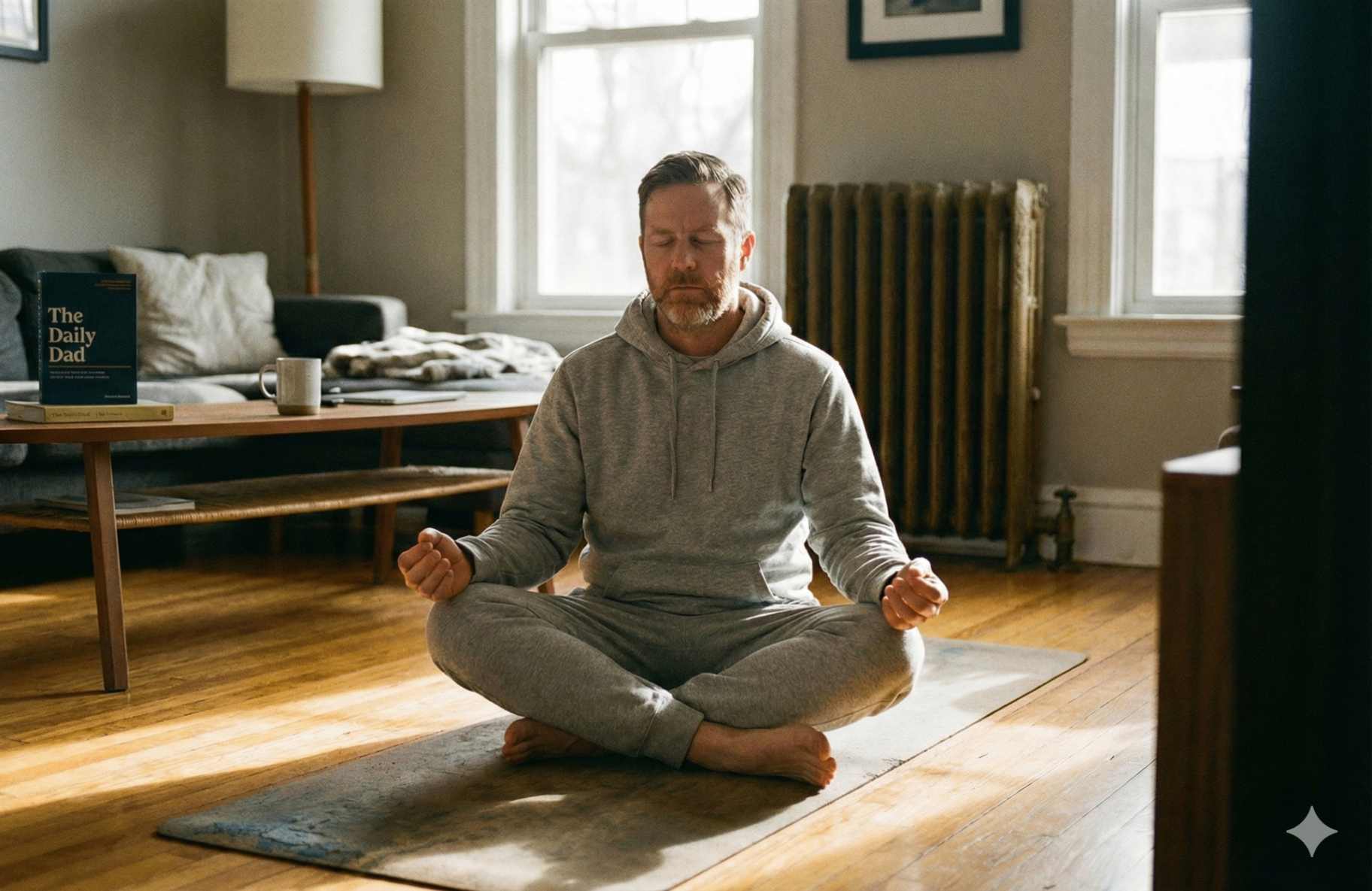
The 5-Minute Morning Reset
Before you check your phone. Before the day's chaos starts. Give your brain 5 minutes of calm.
- 60 seconds: Deep breaths. In for 4, hold for 4, out for 4.
- 60 seconds: Name 3 things you're grateful for (even small things).
- 60 seconds: Set one intention for the day.
- 60 seconds: Visualize one good moment with your kids today.
- 60 seconds: Stretch. Move. Get blood flowing.
Research Note: This isn't meditation. It's a system reset. Cortisol peaks in the morning—catch it early.
The Emotional Release Valve
Stuffing feelings doesn't make them go away. It makes them explode at the wrong time.
- Schedule 15 minutes daily to feel whatever you're feeling
- Journal, punch a pillow, cry in your car—whatever you need
- Set a timer. When it ends, you're done for the day.
- This contains the chaos so it doesn't leak into kid time.
Research Note: Research shows scheduled worry time actually reduces overall anxiety. Weird but true.
Move Your Body Daily
Exercise isn't about looking good. It's about burning off cortisol and generating endorphins.
- 20 minutes minimum. Walking counts.
- Morning is better (cortisol regulation), but any time works.
- With your kids when possible—two birds, one stone.
- Consistency beats intensity. A daily walk beats weekly gym sessions.
Research Note: Studies show exercise is as effective as antidepressants for mild-moderate depression.
The One-Person Rule
You need at least one person who knows what's really happening.
- Identify one safe person: friend, family member, therapist.
- Tell them the truth. The whole truth. Not the edited version.
- Schedule regular check-ins. Don't wait for crisis.
- Let them check on you. Pride kills. Connection saves.
Research Note: Men who have one close friend report significantly better mental health outcomes post-divorce.
Protect Sleep Like Your Life Depends On It
Because it does. Sleep deprivation makes everything worse—mood, decisions, patience.
- 7 hours minimum. 8 is better.
- No screens 1 hour before bed (hard but worth it).
- Same bedtime, same wake time—even on kid-free nights.
- If racing thoughts keep you up, write them down. Get them out of your head.
Research Note: One week of 6-hour nights impairs judgment equivalent to legal intoxication.
Coming April 27, 2026: Reducing co-parenting communication stress by keeping messages organized and documented can make a significant difference in court.Affirming Dads App will help Dads build court-ready documentation with GPS-verified exchanges.
When Self-Help Isn't Enough
Therapy isn't weakness. It's maintenance. You change your car's oil. You go to the dentist. Your brain deserves the same attention.
Seek Professional Help If:
- Symptoms last more than 2-3 weeks without improvement
- You're having thoughts of self-harm or suicide
- You're relying on substances to cope
- Your work or parenting is significantly impacted
- You feel hopeless about the future
How to find help: Many therapists specialize in divorce and men's issues. Look for someone who understands what dads go through. Psychology Today's therapist finder lets you filter by specialty.
Start Tomorrow Morning
Download our free 5-Minute Morning Reset guide. Print it. Put it by your bed. Give yourself 5 minutes before the chaos starts.
Get the Free Morning Reset Guide